
Last updated November 25, 2026
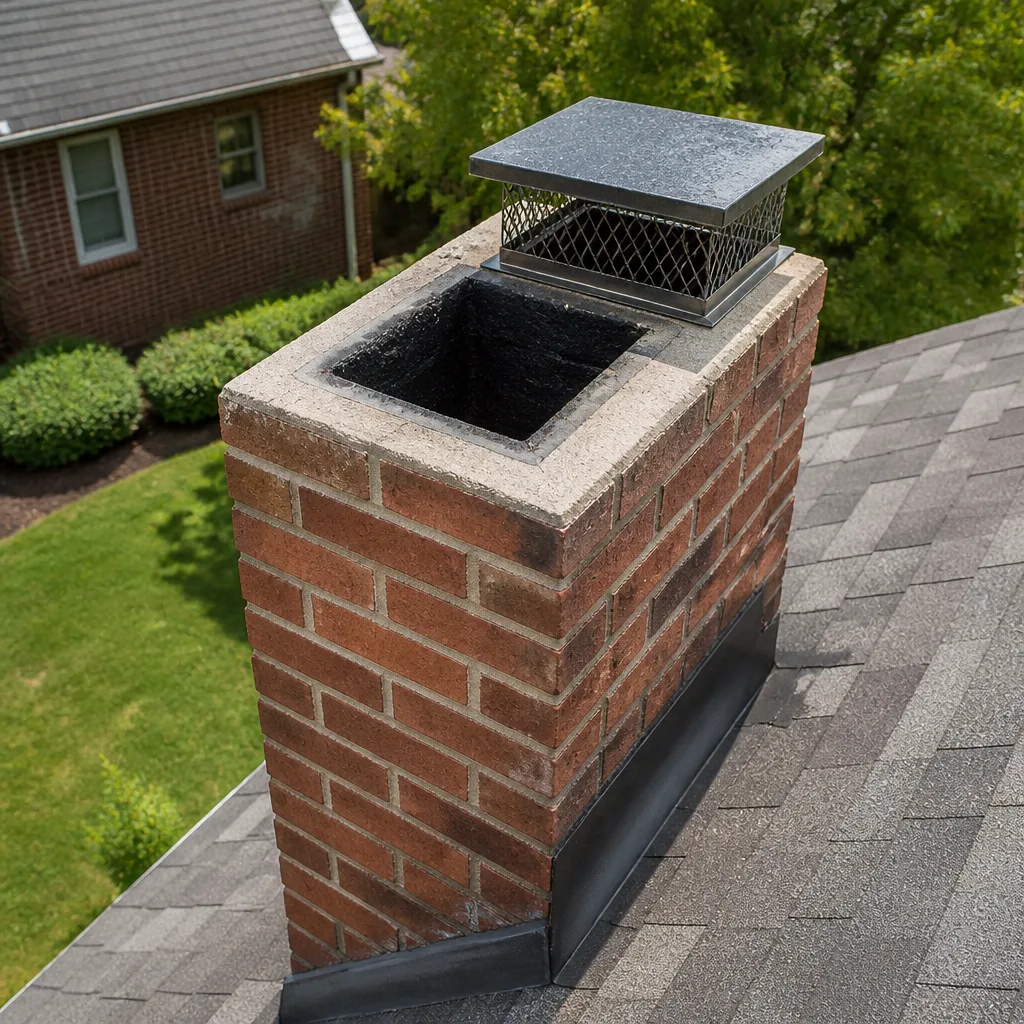 Sweep & inspection
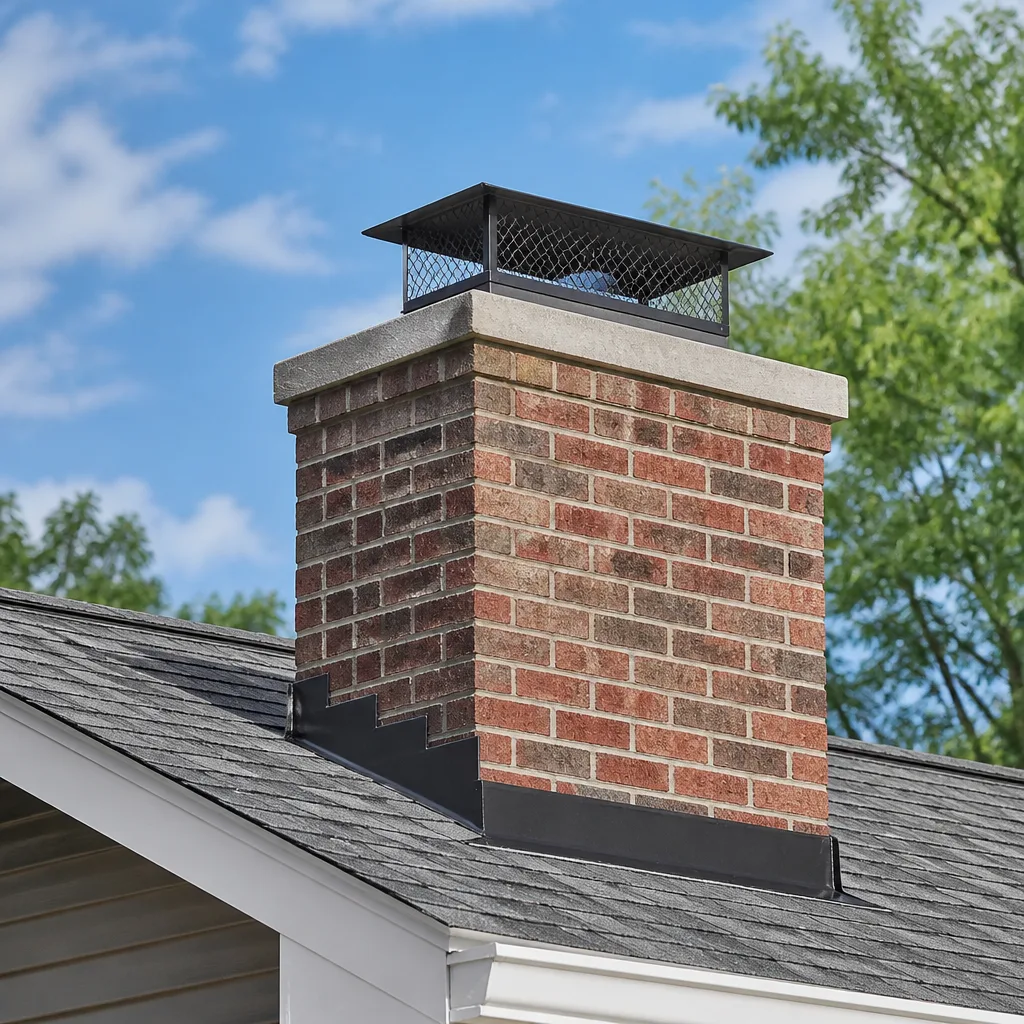 Caps & crowns
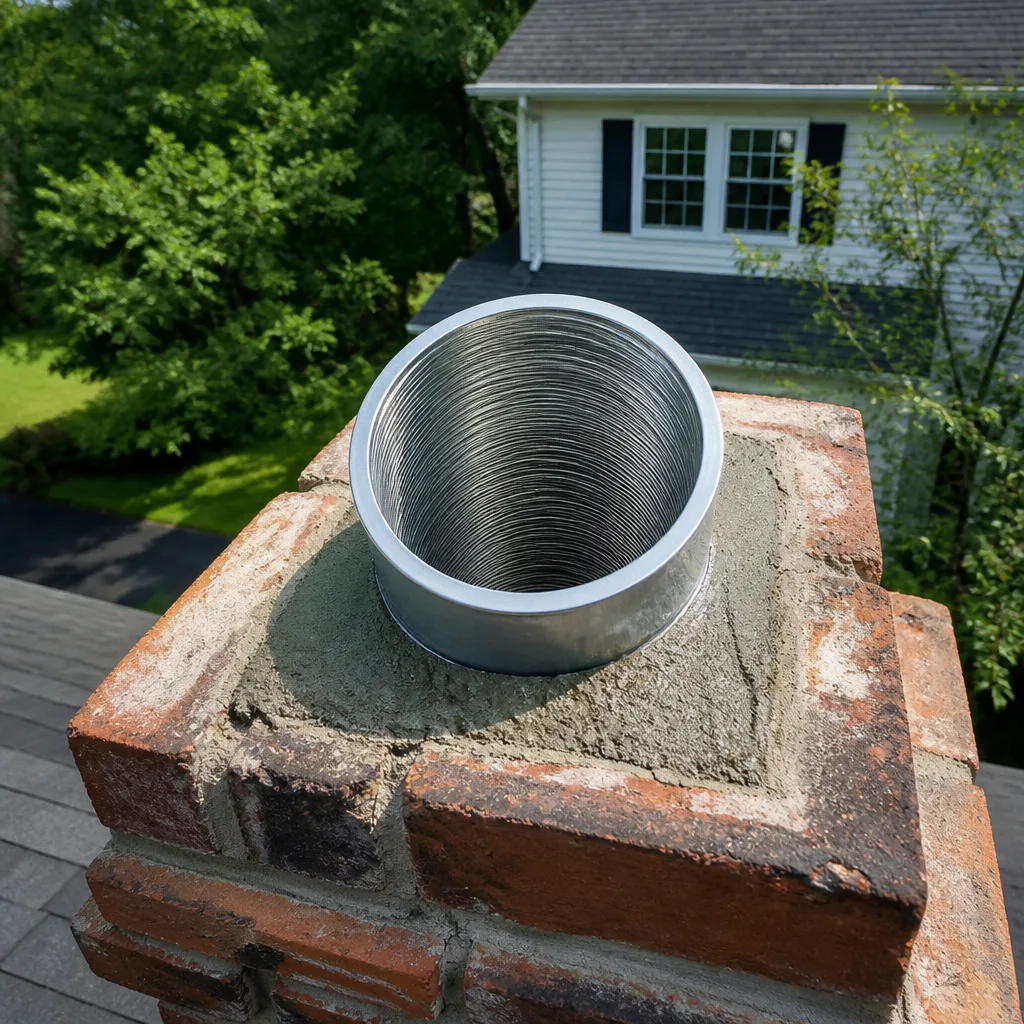 Flue relining
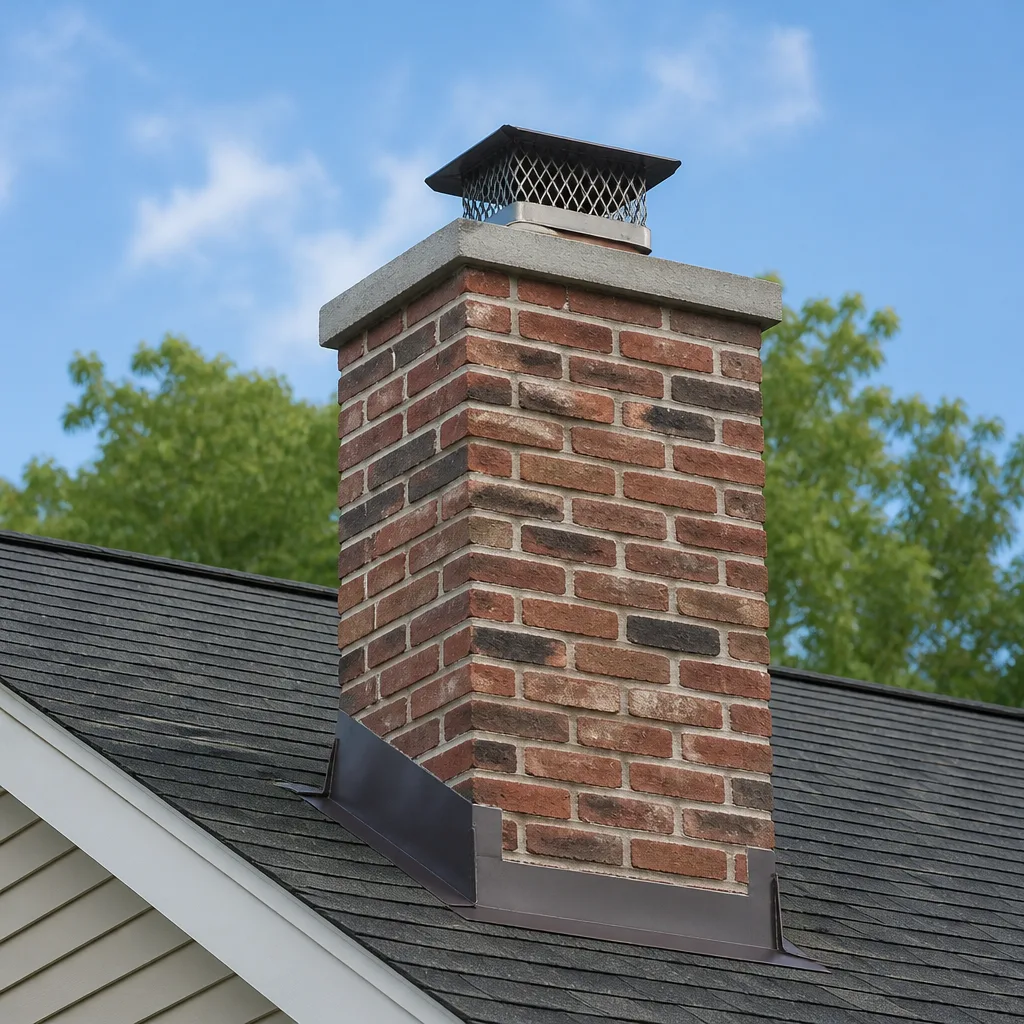 Masonry repair
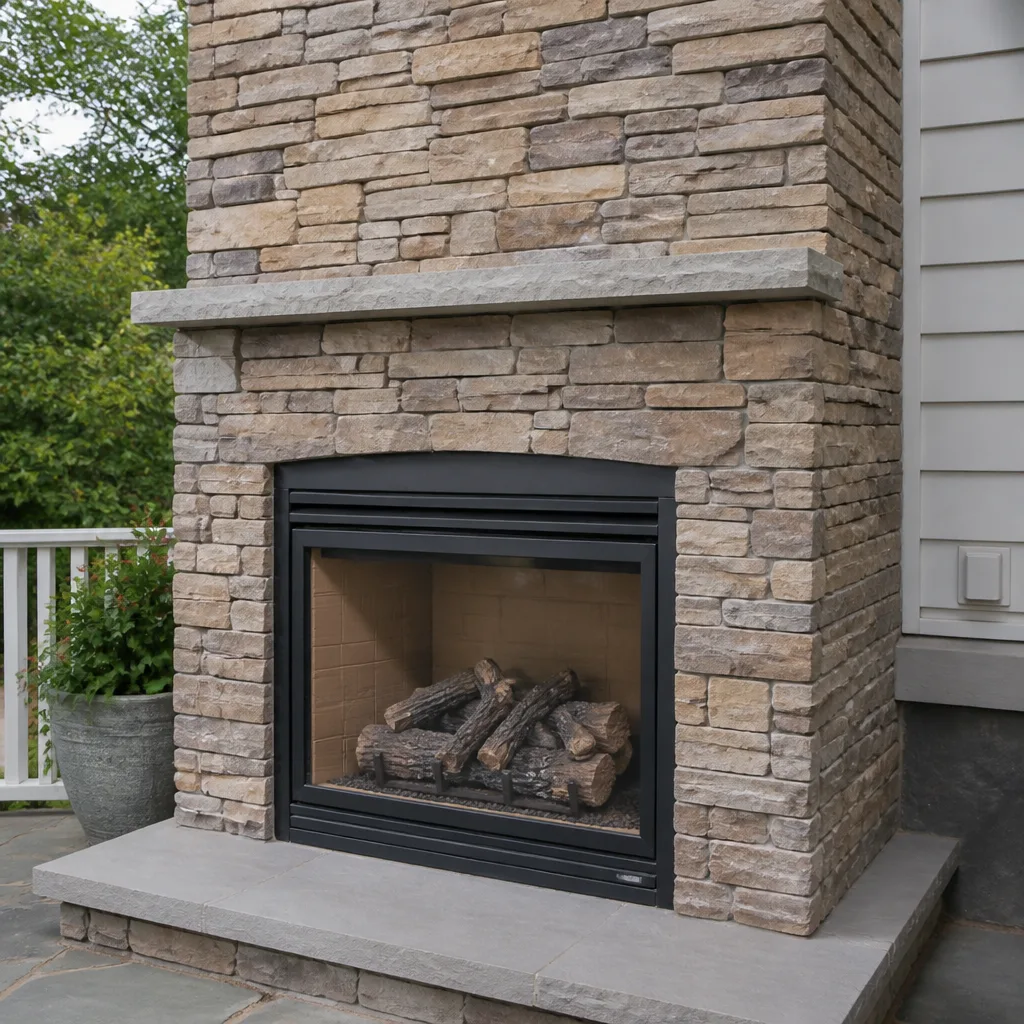 Gas fireplace service
Level 1 sweep and inspection to the NFPA 211 annual standard - flue, crown, cap, and flashing checked and photographed
Chimney sweep logs do not sweep chimneys. They loosen some creosote - which then falls where a brush and vacuum still have to collect it.
Chimney Cleaning Warning Signs: A Tacoma Homeowner’s Reference Guide
A white stain running down the outside of your chimney isn’t a cosmetic problem. It’s efflorescence, and it means water has been moving through your masonry long enough to carry dissolved salts to the surface. The cleaning is the least of what needs to happen next. Most chimney problems announce themselves well before they turn dangerous, but the signals are easy to misread. A little smoke in the room gets blamed on the wood. A sour smell gets called “just how old chimneys smell.” A flaky brick gets ignored because the chimney still draws fine. In this guide we separate the signals that mean stop from the ones that mean schedule a sweep, and the ones that are harmless. You’ll learn which warning signs are urgent, which are routine, and how to describe what you’re seeing so a technician can diagnose it accurately. Everything here is written from our experience working on Tacoma chimneys.
Quick Answer
The chimney warning signs that require immediate action are spalling brick, visible cracks in the flue liner, a rusted damper that won’t seal, and smoke spilling into the room. The signs that mean schedule a sweep are a heavy creosote smell, a smoky fire that’s hard to start, and soot staining around the firebox. Minor surface staining and light efflorescence are maintenance flags, not emergencies. When you’re not sure which category a symptom falls into, call (844) 625-6797 and describe it. We answer 24/7.
Styles & brands we work with
- Sweep & inspection
- Caps & crowns
- Flue relining
- Masonry repair
- Gas fireplace service
Table of Contents
- Visual Warning Signs Ranked by Urgency
- Smell-Based Indicators and What They Actually Mean
- Draft and Performance Signals
- Tacoma-Specific Warning Patterns
- How to Explain Warning Signs to a Contractor
- What a Proper Inspection Actually Checks
- Urgent, Routine, or False Alarm: A Timeline
Visual Warning Signs Ranked by Urgency
Not every mark on a chimney is a problem, and treating a cosmetic stain like a structural emergency doesn’t help anyone. Here’s how we rank the visual signals, from the ones you can note and watch to the ones that mean stop using the fireplace until someone inspects it.
Immediate action required
- Spalling brick. Brick faces flaking off, popping, or crumbling at the joints. This is a moisture problem that has progressed to the point of structural damage. Stop burning until it’s assessed.
- Visible cracks in the flue liner. Even a hairline crack in a clay tile liner lets heat and carbon monoxide reach the masonry around it. This is not a “watch it” item.
- A rusted damper that won’t seal. A damper that stays open or sticks lets heated air escape up the flue when the fireplace is idle, and it can’t do its job of controlling the fire.
- Crumbling mortar joints. Soft, receding, or sandy mortar between bricks means water has been working through the joint for a while.
- White efflorescence combined with any of the above. Water is actively moving through the masonry.
Schedule a sweep or inspection soon
- Heavy soot or dark staining around the firebox opening, which suggests draft problems or incomplete combustion.
- Creosote visible on the smoke chamber or damper, especially glazed or shiny creosote.
- A cap that’s loose, dented, missing, or has a torn spark screen.
- Light efflorescence or staining on the exterior with no spalling.
Cosmetic, note and monitor
- Faint surface staining at the crown edge with no softness.
- A single flaked brick face with intact mortar around it.
- Minor discoloration at the cap that brushes away.
The point of ranking these is honesty, not alarm. If you’re seeing one of the cosmetic items, you don’t need a repair crew today. If you’re seeing two or more from the immediate-action list, you do. We’ve seen Tacoma homeowners treat a crumbling crown like a paint problem and we’ve seen a minor stain get panic-priced by a contractor. Neither is what you want. Photograph anything you’re unsure about, note whether it’s grown, and call us to talk it through.
Smell-Based Indicators and What They Actually Mean
Smell is the hardest signal to interpret because three different problems smell similar to an untrained nose. They aren’t the same, and the fix is different for each. Here’s how we help people tell them apart.
Backdraft odor: cold-weather, short-lived, harmless
On a cold morning, you may notice a smoky smell coming from a fireplace you haven’t used. That’s backdraft. Cold outside air sits heavier than warmer indoor air, the flue is still cold, and a small amount of smoke in the chimney drifts back into the room. It clears once the flue warms up with the first fire of the day. Opening a window for a few minutes and lighting a small, hot paper-and-kindling fire helps. If yours does this every cold morning for a few minutes and then nothing, it’s normal chimney physics.
Creosote smell: acrid, sharp, distinctive
Creosote has a sharp, tarry, acrid smell. It’s most noticeable in warm weather when the chimney is off and the flue isn’t moving air. If you can smell creosote from a cold chimney on a warm day, it’s a strong sign that a sweep is due. Creosote concentrates the longer it accumulates, and the glazed, shiny kind is the fuel source for most chimney fires. You cannot smell the difference between a sweep-due amount and a dangerous amount. That judgment needs an inspection and a camera look.
Sour or musty smell: active moisture intrusion
A sour, musty, or damp-basement smell is different from smoke and different from creosote. It usually means water is getting in, either through the crown, around the cap, or through masonry joints. The smell is often the strongest after a stretch of rainy days. Left alone, that water feeds the spalling and joint damage covered above. If your chimney smells sour, the fix is likely crown and cap work plus masonry, not just a sweep.
Here’s how to describe it to your contractor: which smell you notice, when you notice it, and whether it’s constant or appears after rain or a cold snap. Those three details get you far closer to a correct diagnosis than a description of the smell alone.
Draft and Performance Signals
How a fire behaves tells you a lot about the flue system above it. Difficulty starting, smoke spilling into the room, or a fireplace that burns lazily when it used to roar are all communication from the chimney, and the message is usually about airflow or obstruction.
Smoke spilling into the room
Smoke coming into the room while a fire is burning happens for a few reasons. The flue is blocked or partly blocked, which could be a bird nest, a fallen tile, or heavy creosote. The chimney doesn’t draw enough air for the fire, sometimes called an undersized flue. Or the house is in a negative-pressure state, usually from a bathroom fan, kitchen hood, or tightly sealed modern construction pulling air out of the house faster than the fire can draw it in. Of the three, a blockage is the one that won’t resolve on its own. Stop using the fireplace until it’s inspected.
Difficulty starting a fire
A stubborn fire that smolders instead of catching is an early signal. It can mean wet wood, cold flue, or a chimney that’s lost draw. If the same wood that caught easily last season now smolders, the flue may have picked up buildup. It also sometimes means the outside air intake is blocked. Note whether it happens on every fire or just the first of the day; that distinguishes a flue that needs warming from one that needs sweeping.
Uneven burning and sooty glass on gas inserts
A gas insert with black soot on the glass, a lazy flame, or a burner that doesn’t look symmetric can signal a venting or combustion-air problem. This one is a safety issue that requires a technician, not a homeowner adjustment. Carbon monoxide risk is real when a gas appliance venting system is compromised, so if you suspect it, stop using the appliance and get a professional in to look at it.
A fire that used to draw well and now doesn’t
Change is the signal. If a chimney that worked fine for years now has new draft problems after a renovation, a tree grew taller nearby, or a neighbor’s new addition went up, that’s worth a look. Wind behavior around a roofline matters, and a cap that was fine before can behave differently once nearby heights change.
Tacoma-Specific Warning Patterns
Tacoma’s climate doesn’t do the dramatic deep-freeze damage you see in colder regions, but that can be a trap. Our freeze-thaw cycles are mild and persistent, and that pattern wears on a chimney on its own timeline. A chimney here that spends years wetting and drying, freezing and thawing, at the crown and around the joints will show spalling and joint failure in a way that surprises people who assume “it never gets that cold here.”
What the freeze-thaw pattern does
The cycle matters more than the depth of the freeze. Water enters a brick or a mortar joint, a mild overnight dip freezes it, and the expansion pushes the surface out slightly. It thaws. It wets again. It freezes again. Repeat that through enough late-winter and early-spring cycles in Tacoma and you get flaking brick faces, crumbling crowns, and mortar joints that look sandy instead of solid. Homes on older residential blocks around Tacoma – North Slope, Stadium District, Proctor District – tend to see this on brick chimneys that were built before modern crown and cap detailing became standard. The fix is usually cap, crown, and masonry work, not a full rebuild, but the timeline is: the longer a wet crown is left, the more it costs to fix.
The rain-shadow factor
Tacoma sits in a climate where the rainy season is long and steady rather than punctuated by downpours. That’s actually harder on a poorly detailed chimney in one way: the water keeps arriving, week after week, in amounts small enough that it never triggers a dramatic leak but large enough to keep masonry saturated. The sour smell and the white efflorescence from earlier sections are the classic signals in this climate. If your chimney cap is missing or the crown is flat and cracked, water is entering every rainy week of the season and evaporating too slowly to keep up.
Older Tacoma housing stock
Plenty of Tacoma homes were built when clay tile flues were the standard, and those tiles are good liners when they’re intact. The problem is the joint between tiles, which is where cracks develop first and where an offset or a gap can be hardest to see without a camera. That’s why a sweep that skips the inspection is a real risk on Tacoma housing: the firebox and the sweep both look fine, but the tile joints above them are quietly failing. When we find this, we can often restore the flue with HeatShield ceramic resurfacing instead of relining, and we’ll tell you plainly if that’s the right call.
One reference point we use to judge a Tacoma chimney’s condition: how it behaves compared with surrounding chimneys with the same exposure. If yours looks noticeably worse than neighbors’ chimneys of the same age and construction, that’s a signal something above the roofline is directing water where it shouldn’t. The chimney cap & crown is where we usually start looking.
How to Explain Warning Signs to a Contractor
The single biggest cause of misdiagnosis in chimney work is an incomplete description from the homeowner. A technician arrives, sees no obvious problem from the ground, sweeps, and leaves. But the problem is what you noticed on a Tuesday night six weeks ago. Here’s how to give a technician enough detail to actually catch it.
- Take photos, not just descriptions. Shoot the exterior of the chimney from the ground, the firebox, the damper, and anything you’re seeing (stains, spalling, cracks around the firebox). Note which side of the chimney a stain is on; direction matters for diagnosing water intrusion.
- Note the timing. Is the smell worse after rain? On cold mornings? On warm days when the fireplace is off? Each pattern points at a different problem.
- Note the frequency. One smoky fire in a season is different from a chimney that spills smoke every time. Two or three incidents is worth mentioning; a pattern is a diagnosis.
- State the fuel type. Wood-burning fireplace, gas insert, wood stove, pellet appliance. The fix is different for each, and so is the inspection.
- Describe any recent work elsewhere on the house. A new roof, new HVAC, new kitchen fan, or new windows can change how your house handles pressure and draft. Mention it.
- Describe what’s changed. A chimney that’s behaved a certain way for years and now doesn’t is a specific signal. Say what changed and when.
- Ask for the inspection with the sweep. A sweep without an inspection is a partial job. When you book the chimney sweep, tell them you want the inspection with a camera look at the flue included. Our technicians have up to 15 years of experience, and the camera inspection is standard because it’s the only way to see inside an offset flue.
Two things to add when you call: first, tell them if the chimney is on an outside wall or an interior wall (interior chimneys warm up faster and often draft differently). Second, tell them roughly when the house was built and whether the chimney has been relined in recent memory. Older Tacoma homes on interior chimneys behave differently from newer construction with an exterior chase, and both matter for assessing the symptoms you’re describing.
What a Proper Inspection Actually Checks
An inspection isn’t a sweep with a quick look around. A proper one works top to bottom on the whole system and produces a written report with photos. Here’s what we check, and what you should expect a thorough inspector to check too.
Exterior, from the ground up
- Crown condition – cracks, spalling, water shedding
- Cap and spark screen – attached, intact, sized for the flue
- Brick and mortar joints – softness, spalling, receding mortar
- Flashing where chimney meets roof
- Efflorescence and staining, and which direction it’s moving
Firebox and damper
- Firebox joints and panels – cracks, gaps, missing mortar
- Damper operation – opens, closes, seals
- Smoke shelf, smoke chamber – buildup, shape, condition
Flue, with camera
- Liner integrity – cracks, gaps, missing tiles
- Offset alignment – any place where an offset creates excessive buildup
- Creosote amount and stage (1, 2, or 3)
- Obstructions – nests, fallen tiles, debris
When we find a flue issue, we match the fix to the problem. A structurally sound flue with cracked tile joints is often a candidate for HeatShield resurfacing, which restores the interior without a full reline. An offset or oversized flue that no rigid liner can serve is usually a case for DuraFlex flexible liner systems. Cracks in the firebox or a damaged damper can move into fireplace repair, and worn crowns or missing caps go to cap and crown work. One contractor who handles the whole system means you don’t chase the diagnosis across three different companies. The full range of services is here at Tacoma Chimney Sweep Pros.
Urgent, Routine, or False Alarm: A Timeline
The most useful skill this guide can teach is triage. Ranked by what to do next, here’s how to respond to warning signs in order.
Stop burning and call a professional now
- Smoke spilling into the room from a clean, previously well-drawing fireplace
- Spalling brick on the exterior face, especially with the chimney burning hot near the thimble
- Visible cracks in the flue liner (from a camera or inspection report)
- Any carbon monoxide alarm near a gas appliance that vents through the chimney
- A chimney fire of any size (even a brief roar or metal-on-metal sound) – inspect before the next fire
Book a sweep and inspection within a season
- Heavy creosote smell from a cold chimney in warm weather
- Difficulty starting a fire that has become a pattern
- Soot staining at the firebox opening
- A loose or dented cap
- Light efflorescence on the exterior without spalling
Note and watch
- A faint smell near a cold fireplace on cold mornings that clears within minutes
- Single minor brick surface flake with intact mortar
- Surface staining on the crown with no softness when you press it
If you can’t place a symptom in one of the three tiers, that’s what we’re here for. The kindest answer we can give a homeowner is “that one’s not urgent” as often as it is “that needs a look this week.” Both answers are honest, and they come from the same inspection.
Common Mistakes to Avoid
- Treating the smell as “just how old chimneys smell.” Some smells are normal backdraft. Others are creosote or water intrusion. Assuming the worst-case is “normal” is how sour-masonry problems get a free extra season of damage.
- Skipping the inspection because the sweep came back fine. A sweep clears the flue. An inspection looks at the flue, the joints, the liner, the cap, and the crown. The two are different jobs, and Tacoma housing stock is exactly the kind that benefits from camera inspection.
- Patching a cracked crown with caulk or roof cement. A shallow patch doesn’t stop water from finding the next crack. If the crown is failing, it needs repair or replacement, not a sealant bead.
- Assuming a lazy fire is a wood quality problem. Wet wood explains a slow start. A lazy fire across several loads of dry wood in a flue that used to draw well is a flue signal, not a wood problem.
- Paying for major liner work without seeing the evidence. Ask to see the camera footage of the liner and the joint before you approve relining. A technician who is honest about what your flue needs is also willing to show you.
- Deferring the cap because “it’s just the top.” The cap and crown are the two parts of the system doing the most work to keep water out of everything below. Ignoring them is how a $200 cap becomes a masonry repair.
- Waiting to see if a spalled brick “spreads.” Spalling means short-term water damage has already moved to structural. Watching it is the same as not fixing it.
See the difference
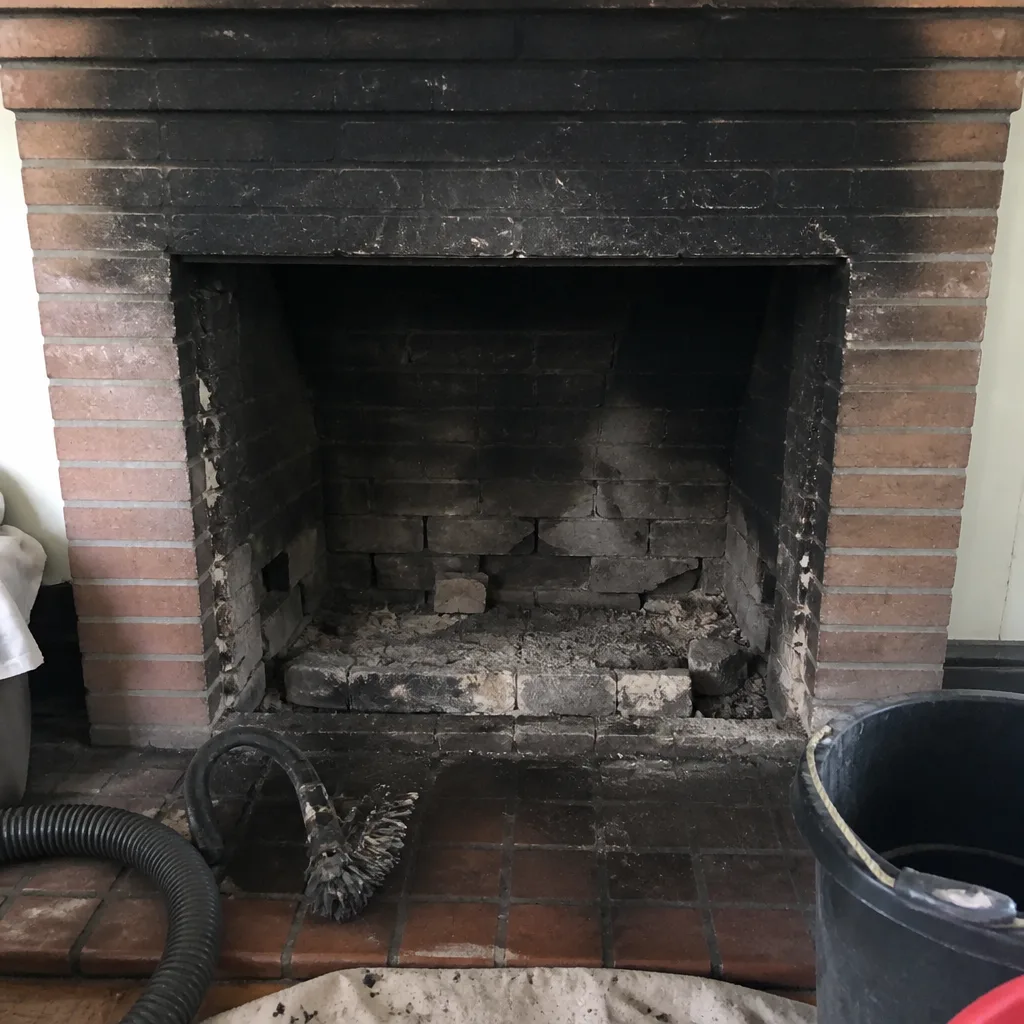 Before
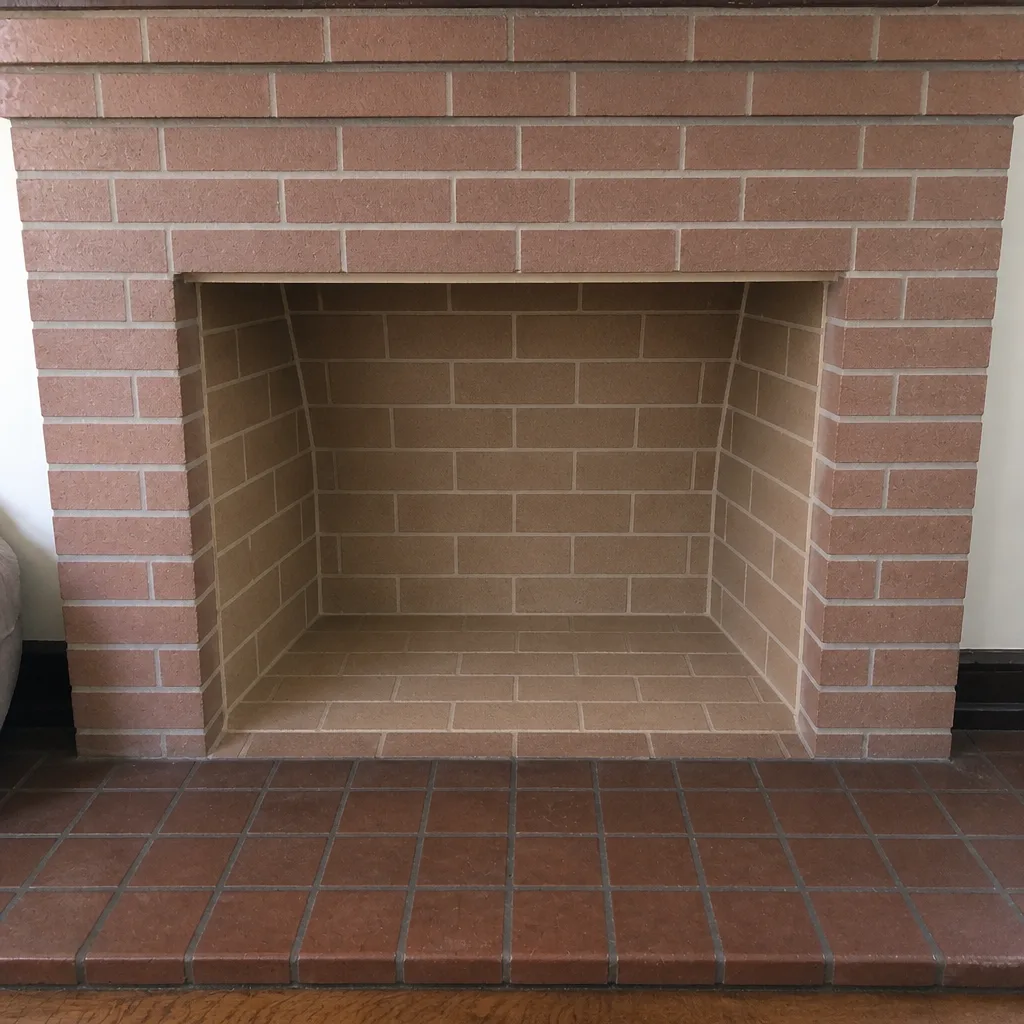 After
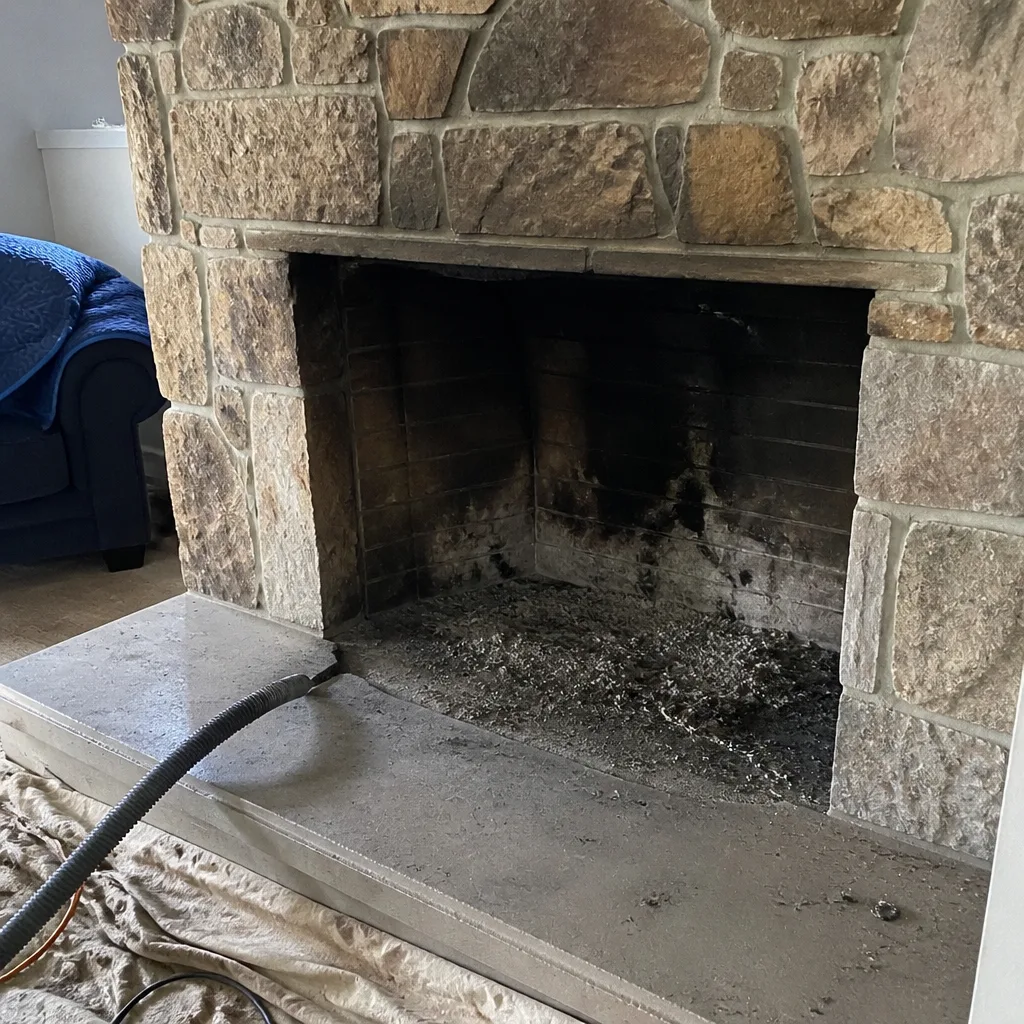 Before
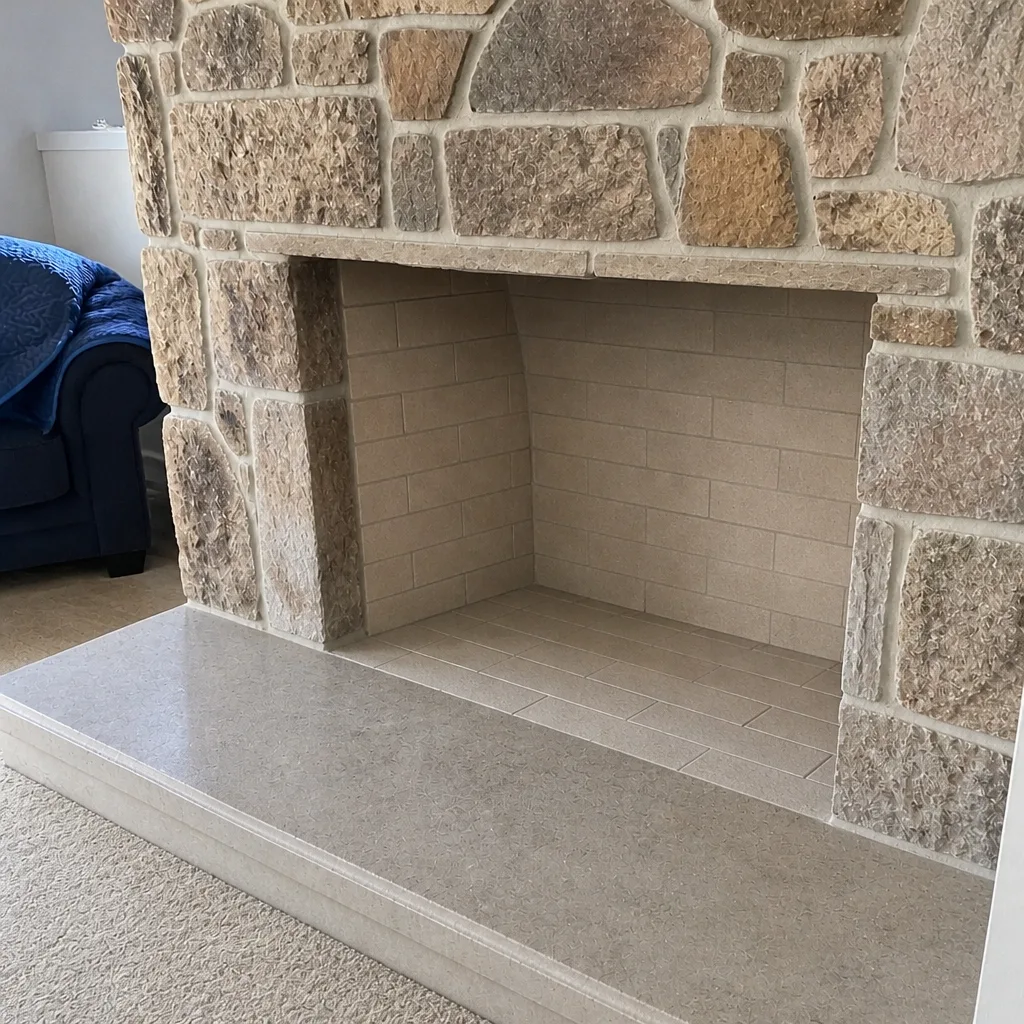 After
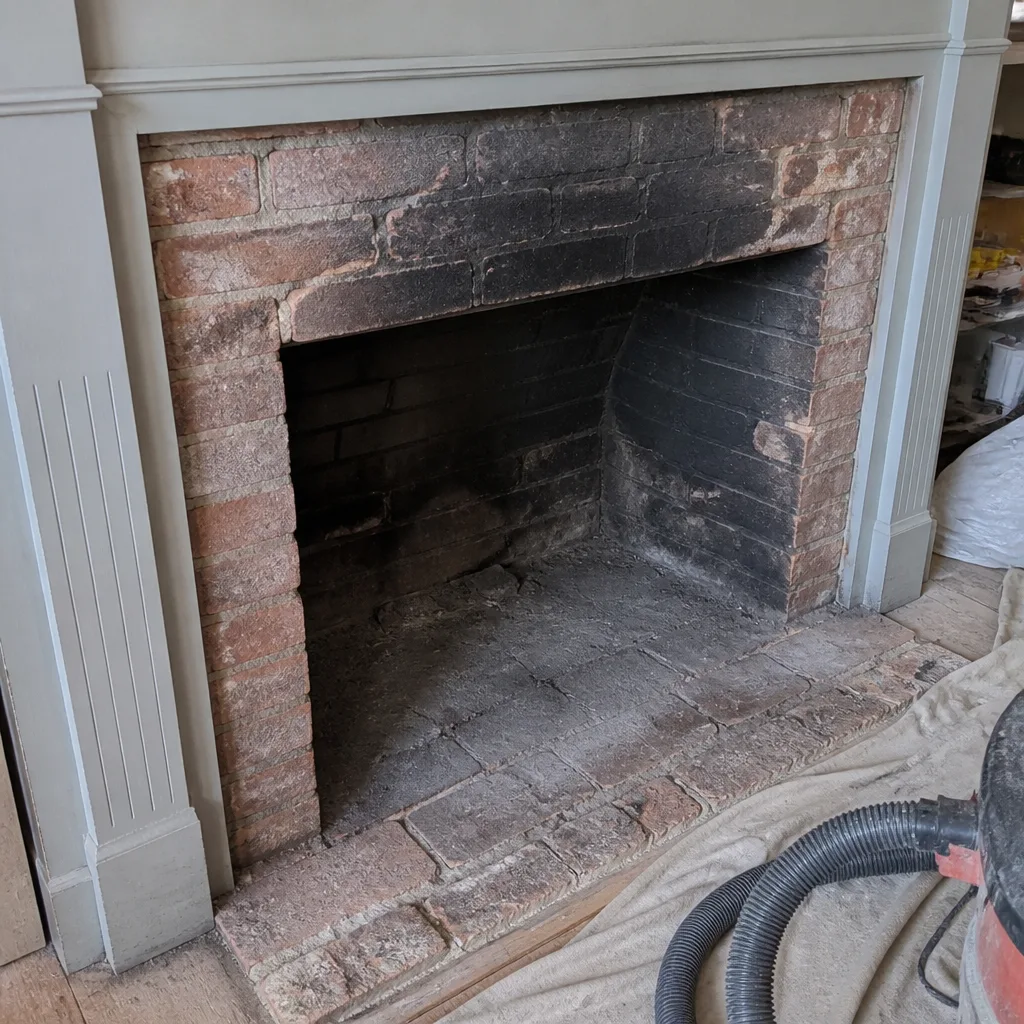 Before
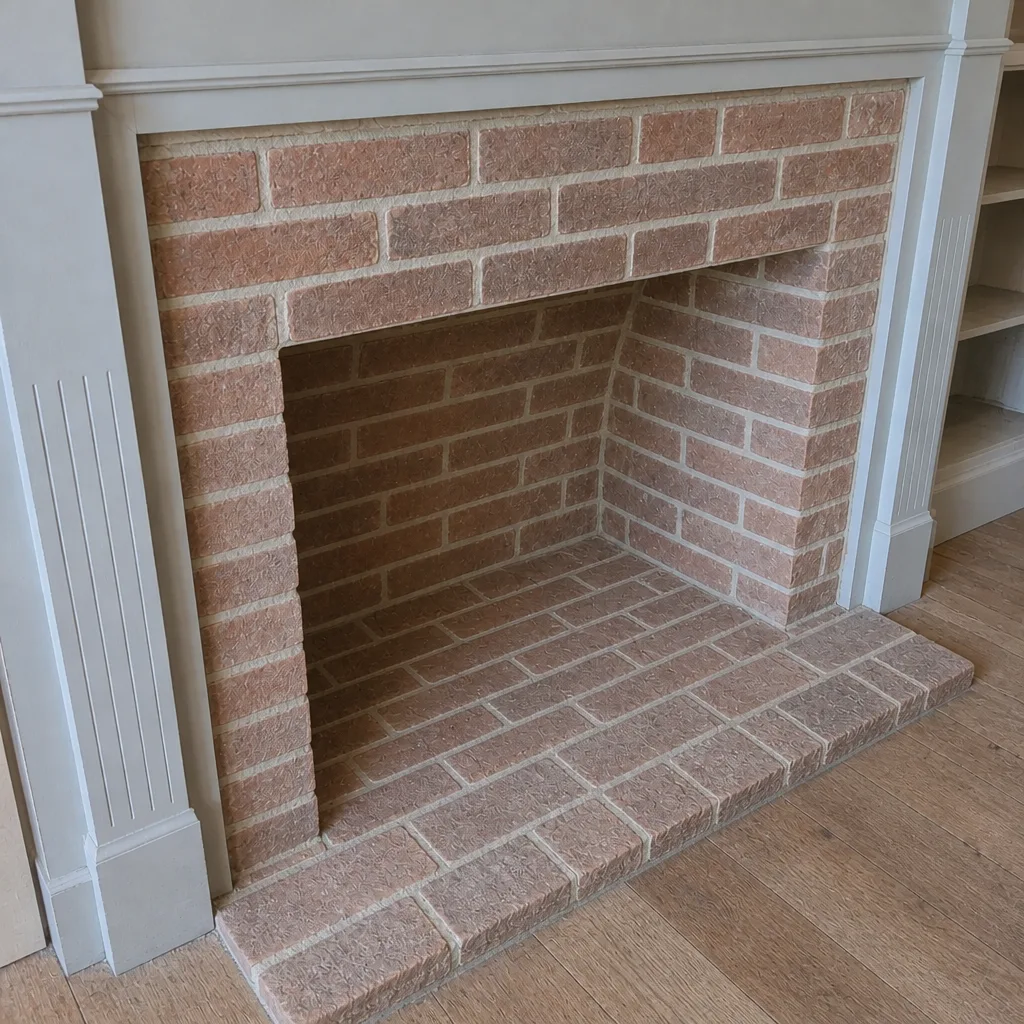 After
When to Call a Professional
Call us when a warning sign belongs in the immediate-action tier – spalling brick, visible liner cracks, a rusted damper, smoke spilling into the room, or a chimney fire of any kind. Call when a symptom has become a pattern rather than a single event, when a sour or musty smell returns after rain, or when the smell of creosote is noticeable from a cold chimney. Call when you’ve bought a house with an older chimney and haven’t had the flue inspected yet; that’s the highest-value inspection you can buy. Call when the fire used to draw better and now doesn’t. Call before the first fire of the season, not after. Tacoma Chimney Sweep Pros offers free estimates in Tacoma – call (844) 625-6797. We answer 24/7. Fast dispatch from 7am to 7pm, Sunday through Friday.
Frequently Asked Questions
Sometimes, not always. A light white haze on the crown edge with solid masonry underneath is a cosmetic flag: note it and get it looked at with the next sweep. A heavy white stain combined with any softness, flaking brick, or crumbling mortar is efflorescence with active water movement behind it, and that needs cap and crown attention sooner. Call (844) 625-6797 for the difference to be diagnosed in person.
A chimney burning wood regularly should be swept roughly once a year, and often more when it’s used heavily through the winter. A gas insert vented through the chimney still needs an annual inspection even if it rarely needs sweeping. The bigger factor in Tacoma isn’t the number of fires; it’s the condition of the cap and crown, because that’s what’s keeping masonry dry through our long rainy season. Book the inspection with the sweep and you’ll get both the sweep and the structural look in one visit.
Often, yes. Cracked tile joints in a flue that is otherwise structurally sound can frequently be resurfaced with HeatShield ceramic restoration, which restores the interior surface without full relining. Flues that are offset, oversized, or where the original liner has gaps that can’t be resurfaced often need DuraFlex flexible liner systems instead. We’ll show you the camera footage before recommending either, and we’ll tell you exactly what your flue needs – and what it doesn’t.
Creosote accumulates, and the risk isn’t only buildup. A skipped season is also a skipped inspection, which is when a crack in the liner or a soft mortar joint would have been caught. Left alone, that crack lets creosote, heat, and carbon monoxide reach the masonry around the flue. In Tacoma, a skipped season also means a wet crown got another winter to spall. The sweep itself is the small errand; the inspection is the point. Call (844) 625-6797 to book before the first fire.
A small puff of smoke on first lighting that clears within a minute is backdraft from a cold flue, and it’s normal in Tacoma’s cool mornings. Smoke that continues past the first couple of minutes, or that spills out when the fire is already burning well, is a warning sign about draft or a partial flue blockage. If the smoking started recently and didn’t used to happen, treat it as a signal and get the flue inspected.
Creosote smells sharp, acrid, and tarry – like a fireplace but sharper. Water intrusion smells sour, musty, and damp, more like a basement than a fire. Creosote is most noticeable from a cold chimney in warm weather; the sour smell often gets worse after rain. If you can tell which one you’re smelling, you’ve already helped narrow the diagnosis. If you can’t, that’s a normal call to make.
Yes, in almost every case. A cap keeps rain, snow, birds, and debris out of a flue that is otherwise wide open at the top. Rain coming straight down a cap-less flue is one of the most common causes of the sour smell and efflorescence we covered above. A damaged or missing cap is a small fix that protects everything under it. The cap and crown work is a core service for us, not an upsell.
The Bottom Line
Chimney warning signs fall into three tiers: stop burning, schedule a sweep, or note and watch. Spalling brick, visible liner cracks, a rusted damper, and smoke spilling into the room are the stop-burning signals. Creosote smell, a smoking fire, and light efflorescence are sweep signals. Faint cold-morning backdraft and minor surface stains are the watches. Tacoma’s mild but persistent freeze-thaw cycle makes the crown and cap the hidden accelerators of masonry damage, so those deserve more attention here than homeowners usually give them. Get the inspection with the sweep, ask to see the camera footage, and describe your symptoms with photos, timing, and fuel type. We’ll tell you what’s urgent, what can wait, and what needs nothing at all.
Contact Tacoma Chimney Sweep Pros
If a warning sign has you unsure which of the three tiers it belongs in, call us and describe what you’re seeing. We’ll tell you what we’d want to know and what we’d want to look at, and we’ll book an inspection with a camera look at the flue if one is warranted. Our technicians have up to 15 years of experience and work with the materials the chimney industry actually specifies – HeatShield, Gelco, Olympia Chimney, Famco, and DuraFlex liner systems among them. We handle sweeping, inspection, fireplace repair, chimney repair, and cap and crown work as one contractor, so a diagnosis doesn’t get lost between subcontractors. Call (844) 625-6797 for a free estimate. We answer 24/7. Fast dispatch from 7am to 7pm, Sunday through Friday. Nothing is recommended without camera evidence you can see for yourself, and we’ll say plainly when a piece of work can safely wait until next season.
Written by the team at Tacoma Chimney Sweep Pros.